
- Home
- Case for Action
- IMFUND
- Solution - 3rd generation
- Buy-in
- AGF
- Achievements
- Awards
- Negotiations
- Bali 2007
- Bangkok 2009
- Barcelona 2009
- Bonn 2008
- Bonn 2009
- Bonn 2011
- Bonn 2013
- Brussels 2008
- Cancun 2010
- Copenhagen 2009
- Doha 2012
- Durban 2011
- Geneva 2009
- Lima 2014
- London 2008
- London 2009
- London 2010; 1
- London 2010; 2
- London 2011
- London 2012; 1
- London 2012; 2
- London 2013
- Montreal 2013
- Panama 2011
- Paris Goals 2016
- Poznan 2008
- In limbo ...
- Presentations
- Historical
- Search
- About
No net incidence at Bonn
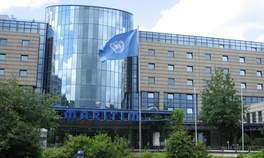 The Rebate Mechanism (RM) proposal gained further support at a side event at the Bonn Climate Change Talks entitled: "Ensuring no net incidence on developing countries from carbon pricing of international transport", held on 8 June 2011. See:
Event flyer & RM keys  | Optimal Rebate Key Study (0.6MB) | RM Presentation (0.7MB) | RM Outline and keys (2-pager) (0.3MB).
For recent discussions at the IMO see: GHG-WG 3 summary.
The debate was very good and covered technical details as well as ongoing negotiations on the matter.
You may wish to review the RM Presentation (0.7MB), read the Optimal Rebate Key Study (0.6 MB), grab the RM Outline and keys (2-pager) (0.3MB) or see the GHG-WG 3 summary.
The Rebate and Attribution keys for nearly 200 countries are also available as handy 2-page summaries, in three languages: